
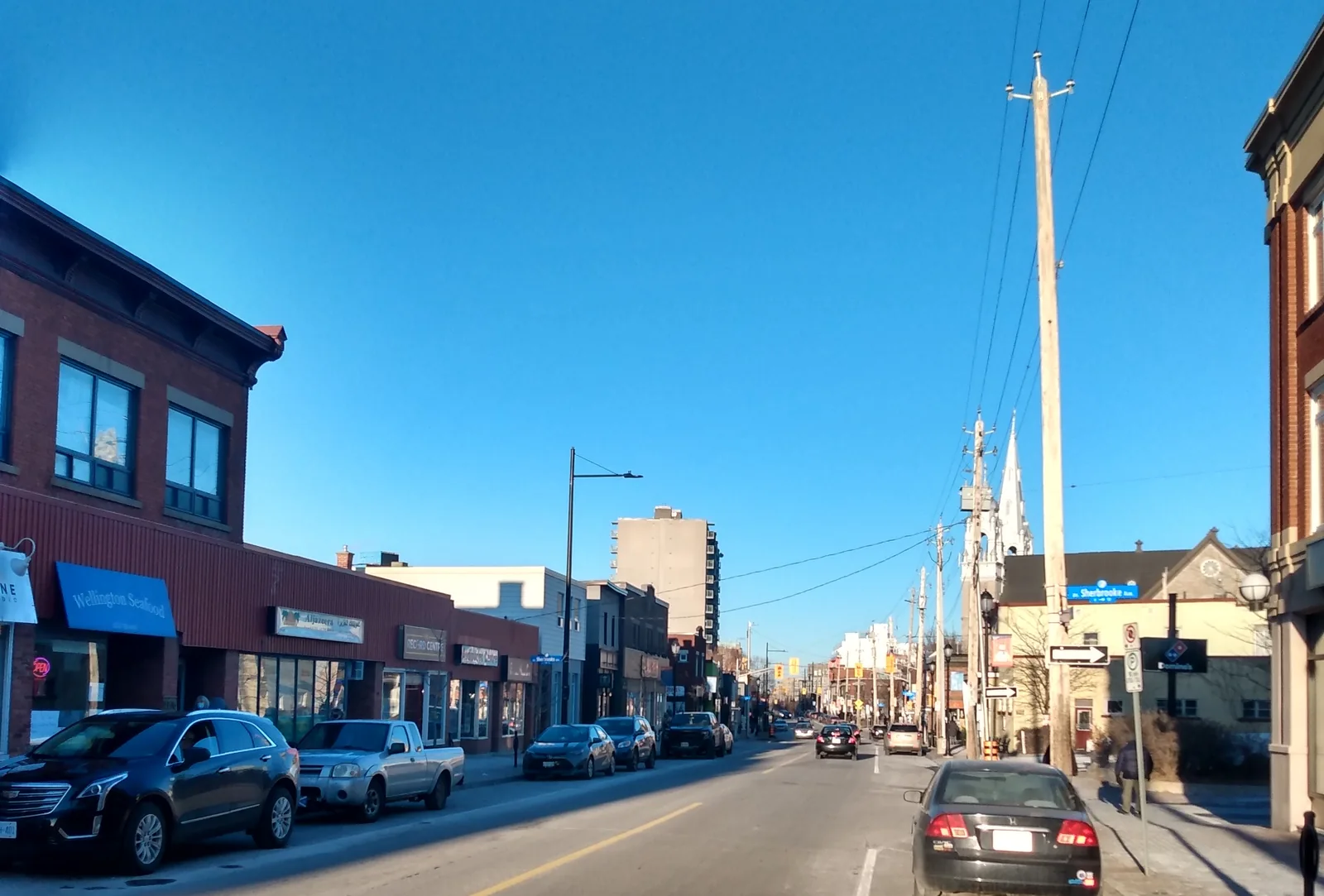
Understand the two ends of the corridor
Hintonburg and Wellington West share a busy main-street corridor, but the names cover more than one residential setting. The eastern stretch around Hintonburg has compact lots, small commercial buildings and a mix of older homes and infill. Farther west, Wellington Village adds a different pattern of residential streets and larger houses in some pockets. Treat the combined guide as a way to compare blocks, not as a claim that the whole corridor feels identical.
Wellington Street West is the centre of much of the shopping and café activity. Parkdale is an important north–south route, and the Scott Street edge has its own transit and development context. A home one or two turns off the main street may feel quite different from an apartment directly over a business or beside a service entrance.
Start by locating your workplace or usual transit connection, then choose the part of the corridor that makes ordinary errands easy. Walk to groceries, a park and the nearest useful stop from the front door. Repeat the walk at your normal travel time; a pleasant Saturday visit does not reveal the entire weekday routine.
Building ages and the questions behind an attractive renovation
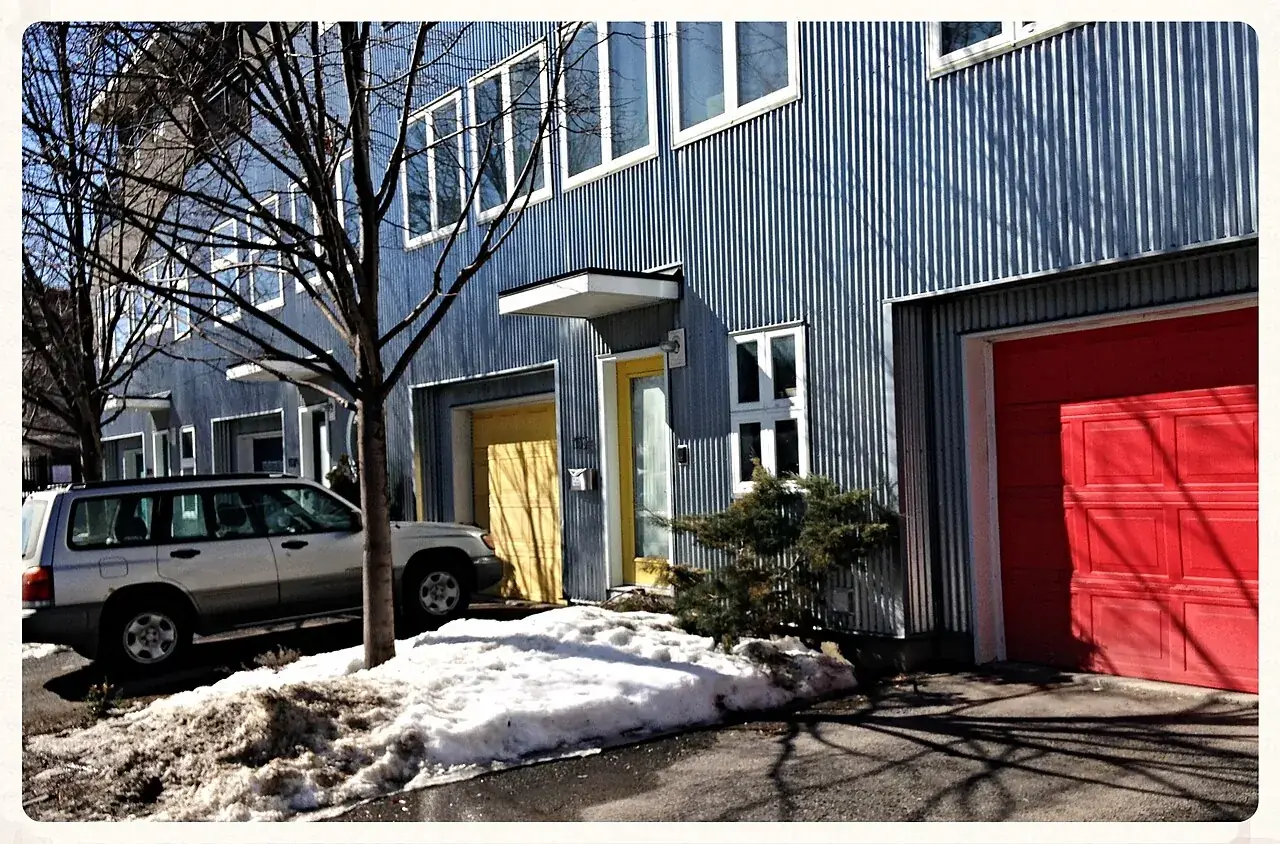
The City’s Wellington Street West design plan traces substantial development to the late 1800s and early 1900s, with growth continuing westward and later construction adding variety. That history explains the mix of older wood-clad and brick houses, small apartments, commercial buildings and contemporary infill. There is no single useful building age for the entire corridor.
With an older home, ask which parts are original and when the roof, heating, plumbing and electrical systems were last renewed. Inspect drainage, basement history and access to the side and rear of the property. Narrow lots can make exterior work, equipment access and snow storage more complicated. A new kitchen does not answer those questions.
For infill, review the construction and permit records, ventilation, sound separation, storage and the layout of shared or closely adjoining spaces. Check how the driveway, garbage and bicycle access function when every unit is occupied. A condo or small shared-property arrangement needs a review of responsibilities and long-term repairs. The practical comparison is the documented condition and usable layout, not “old charm” versus “new convenience” as marketing labels.
Our Ottawa insulation-options guide helps distinguish a material enquiry from a complete installation proposal.
Property tax and predictable ownership costs
A small converted house, a larger Wellington Village freehold and a new condo can carry very different tax bills. Start with the assessment and actual bill, then use the City of Ottawa’s 2026 estimator. The assessment is not the asking price. A street’s popularity does not supply the missing calculation.
The table shows residential taxable property with full urban transit and fire services, curbside garbage and no sewer surcharge, checked on 9 September 2026. It is an assessment-based illustration, not an average for Hintonburg or Wellington West. Different condo or waste arrangements, local charges and separately billed utilities are outside the example. Monthly figures are annual estimates divided by twelve.
For a freehold house, identify the work most likely to be needed soon and price it separately from taxes. Access constraints, exterior repairs and drainage issues should be investigated during inspection rather than covered by a vague annual allowance. For a condo, read the reserve-fund information and planned work. Include parking, insurance, utilities and any shared maintenance fee when comparing the actual cost of two addresses.
| 2026 assessed value | Estimated annual tax | Monthly budget equivalent |
|---|---|---|
| $300,000 | $4,083.43 | $340.29 |
| $400,000 | $5,355.58 | $446.30 |
| $600,000 | $7,899.86 | $658.32 |
Street upkeep, winter and changing surroundings
An attractive main street does not tell you who maintains a private lane, walkway or shared driveway. Ask for the arrangement that applies to the property, including snow clearance, garbage storage and repairs to shared surfaces. Narrow side passages and exterior stairs deserve a winter inspection plan even when the viewing takes place in summer.
The City’s snow-clearing priorities help explain why main routes and residential side streets may be treated at different times. Look for a practical place to store snow without blocking access, and check how a plow windrow affects your entrance. If you rely on street parking, verify restrictions and the alternative arrangement before committing.
This is also an area where infill and larger redevelopment can change the immediate surroundings. Walk the adjacent lots and ask about visible construction, delivery routes and building work. Review current applications for a specific neighbouring site if it is material to the decision. Do not assume an empty lot or low building will preserve a view indefinitely, and do not treat a proposal as an approved or completed project.
Groceries and the Parkdale Market routine
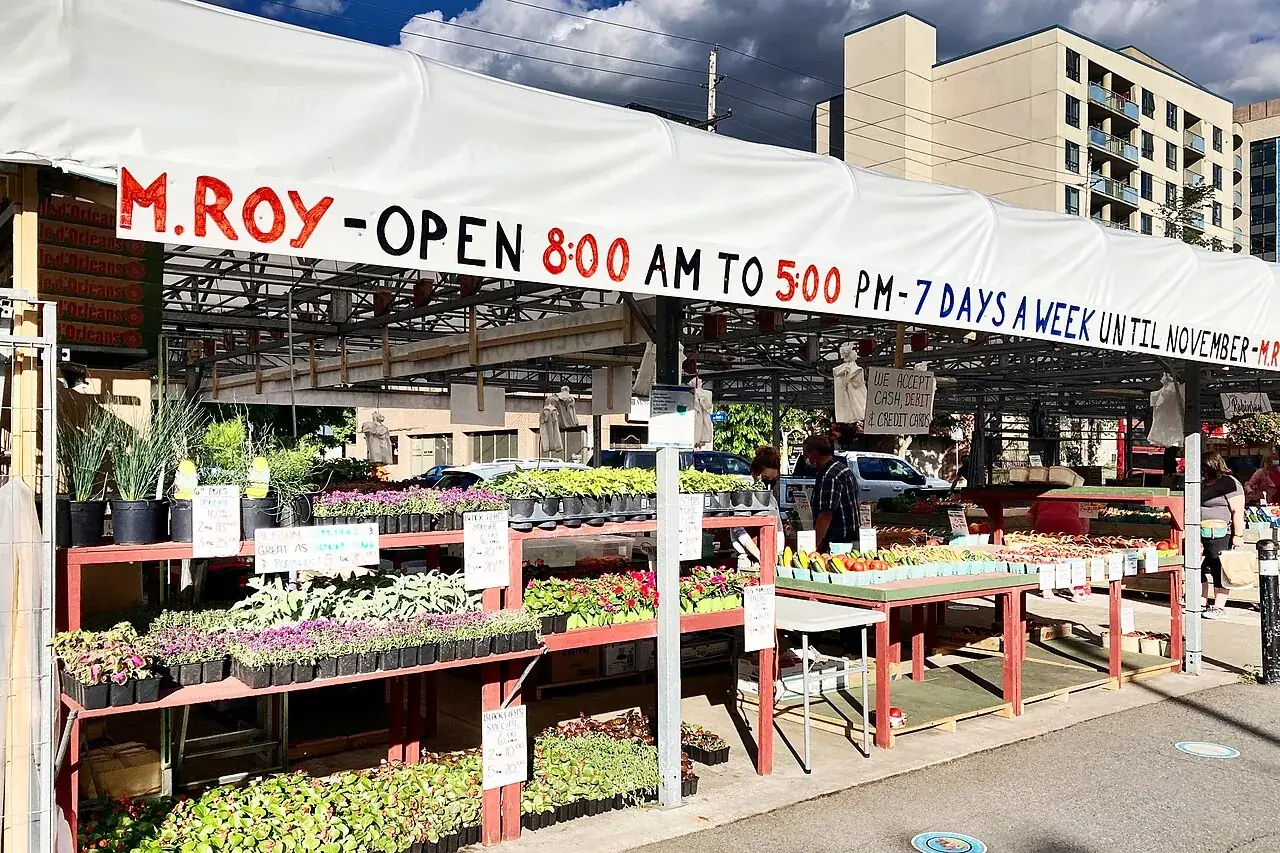
Hintonburg Market at 1059 Wellington Street West offers a local grocery and butcher stop toward the eastern end of the corridor. Metro Island Park at 345 Carleton Avenue is a supermarket reference toward the west. Parkdale Market adds produce, plants and market activity near Parkdale Avenue. Compare these locations against the home rather than assuming every address is equally convenient to all three.
The market can be part of an enjoyable shopping routine, but check current dates, seasons and vendor availability. Keep a dependable plan for household staples and larger grocery trips. Someone living closer to Hintonburg’s eastern edge may shop quite differently from a resident near Island Park; the shorter repeated trip often matters more than the total number of businesses in the district.
Before deciding, carry a realistic shopping load along the route and inspect the last part into the building. Check parking or delivery access if you buy in bulk. Map a pharmacy, parcel pickup and laundry option if needed. A useful neighbourhood routine combines several errands without repeatedly crossing a busy road or making a separate car trip for each task.
Café owners planning a rewards scheme can compare coffee shop loyalty programs by workflow, costs and customer experience.
Transportation, cycling and parking changes
Bayview and Tunney’s Pasture are useful rail reference points for different parts of the corridor. Bayview provides a connection between Lines 1 and 2, while the walk to either station depends on the exact street. Test the route to the entrance, including crossings and winter exposure. Use OC Transpo’s current trip planner to compare walking, local bus and rail combinations for your actual destination.
The western rail extension remains a project to check against the official opening information; do not base a present-day commute on a future station. Construction can also change walking and cycling connections. A property closer to a map pin may be less convenient if the usable entrance or current route is elsewhere.
Parking rules have been changing along Wellington West and in nearby commercial areas. Read the City’s on-street parking updates and the signs on the block rather than relying on memories of free parking. If the home includes a space, verify its dimensions and whether access is shared. For cycling, inspect secure storage and the whole route to work; a convenient main street is not automatically the most comfortable cycling route.
Schools and planning beyond this September
Connaught Public School at 1149 Gladstone Avenue, Elmdale Public School and Fisher Park/Summit Alternative at 250 Holland Avenue are school names to investigate in and around this corridor. They are orientation points, not a statement that every home is assigned to them. Use the OCDSB school locator with the exact address, grade, program and school year.
Families staying several years should also read the West Central Boundary Review and confirm any future effect directly with the board. A current placement and a future implementation plan are different things. Do not rely on an old neighbourhood guide or a seller’s school list to resolve that distinction.
Ottawa’s English Catholic, French public and French Catholic boards have their own admission and placement processes, introduced through the City’s school-enrolment page. Check the relevant board if those programs fit your family. Rehearse the walk across Wellington, Parkdale or Scott where necessary, and investigate childcare and transportation separately. An excellent-looking route on a map still needs to work at arrival, dismissal and winter pickup times.
Parks, community space and nearby activities
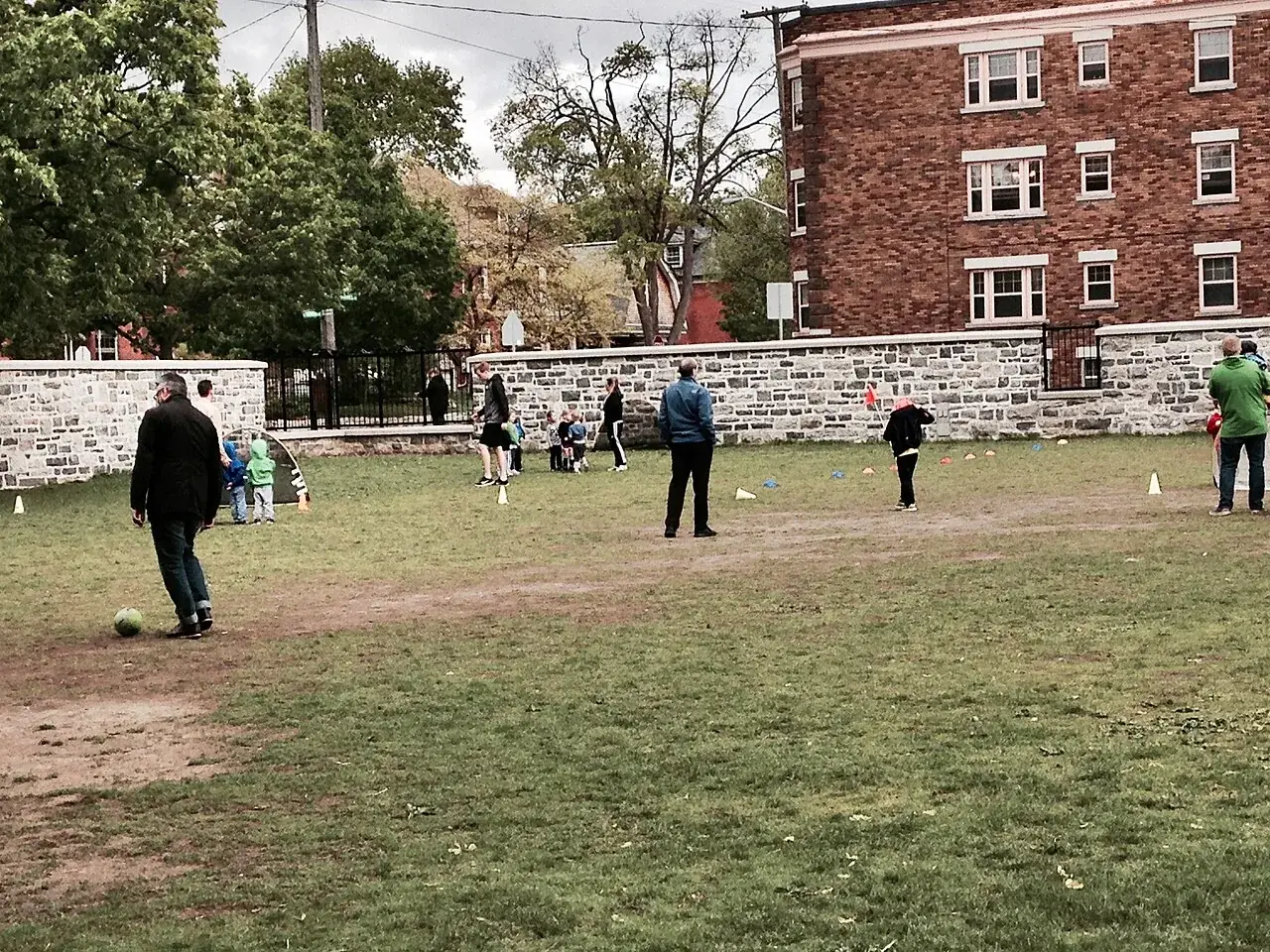
Hintonburg Park offers a small local green-space setting, while the market and Wellington corridor support short outings without a major trip. Ottawa Tourism’s Wellington West overview introduces local food, arts and shopping. For a resident, the most useful choices are often the ones you can repeat comfortably within an ordinary week.
The Hintonburg Community Centre at 1064 Wellington Street West is a practical place to investigate recreation and community activities. Rosemount library is another local reference point. Check current hours, programs and availability before organizing a routine around them. Being nearby does not guarantee space in a registered class or childcare program.
For longer outdoor time, consider routes toward the Ottawa River, but inspect the actual connections from your street. A café stop, a market visit and a short park break can work as one local loop; a river outing may require more time and a different crossing. Choose the home for the balance you want between main-street activity and a comfortable retreat rather than expecting the same atmosphere everywhere.
Use the Ottawa dining guide to plan a meal around the part of Wellington West you already intend to visit.
What to confirm at a viewing
Open the property comparison with four concrete checks: the condition of major systems, the usable grocery route, the actual commute and the responsibilities for shared space. Ask for documentation where a listing says “fully renovated” or “low maintenance.” For a multi-unit building, inspect the entrances, garbage and bicycle arrangements when imagining it at full occupancy.
Return during a busier period and look at adjacent construction or delivery activity. Confirm parking and school information independently. If two homes seem similar, compare the time and effort required for the tasks you repeat most often. A slightly different location within this corridor can change the weekly routine more than an extra café or a more fashionable street name.
If you are considering the next area west, the Westboro resident guide compares its shopping streets, housing and river access.
Frequently asked questions about Hintonburg & Wellington West
Are Hintonburg and Wellington West the same place?
The names overlap in everyday use, but the combined corridor includes different residential pockets. Hintonburg is toward the eastern end; Wellington Village lies farther west. Use the specific street and your daily destinations to compare properties rather than treating the names as interchangeable boundaries.
How old are the houses?
The area includes late-nineteenth- and early-twentieth-century buildings, later housing and contemporary infill. Confirm the individual property’s age and major upgrades. Narrow lots, shared access and the quality of renovation records can matter as much as the original construction date.
What property taxes should I expect?
Use the actual assessment and tax bill. Our 2026 urban curbside example is $5,355.58 at a $400,000 assessment, or $446.30 per month. This is not a measured neighbourhood average; condo services and property-specific charges can change the total.
Which rail station is most convenient?
Bayview or Tunney’s Pasture may be useful, depending on the address and destination. Walk to the real entrance and compare bus connections. Check current extension and construction notices; a planned station should not be counted as an operating commuting option.
Can I rely on a property listing’s school information?
Use it only as a starting point. Check the address, grade, program and year with the school board, and ask about future boundary changes if you plan to stay. Childcare and school transportation require separate confirmation.
Where should I start grocery shopping?
Useful reference points are Hintonburg Market at 1059 Wellington West, Metro Island Park at 345 Carleton Avenue and Parkdale Market. Their value depends on your location and shopping habits. Check seasonal market availability and compare your regular basket rather than assuming one option covers everything.
Explore more local guides from Ottawa Reviews.
How we research and correct our guides · Suggest a correction


.jpg)
.jpg)
.jpg)


