The useful starting point
A bag has to work between the front door and the final destination, not only at an airport counter.
Choose the bag for the entire journey
A bag has to work between the front door and the final destination, not only at an airport counter. Think about stairs, train platforms, a hotel room, public transport and how often you will change accommodation. Then match the format to the contents and the person carrying them.
These five formats solve different problems. Check the operating airline and fare before assuming a cabin bag is included. No single bag type is universally airline-approved, and this comparison does not treat extra capacity as an automatic advantage.
1. Carry-on suitcase — organized packing for a compact trip
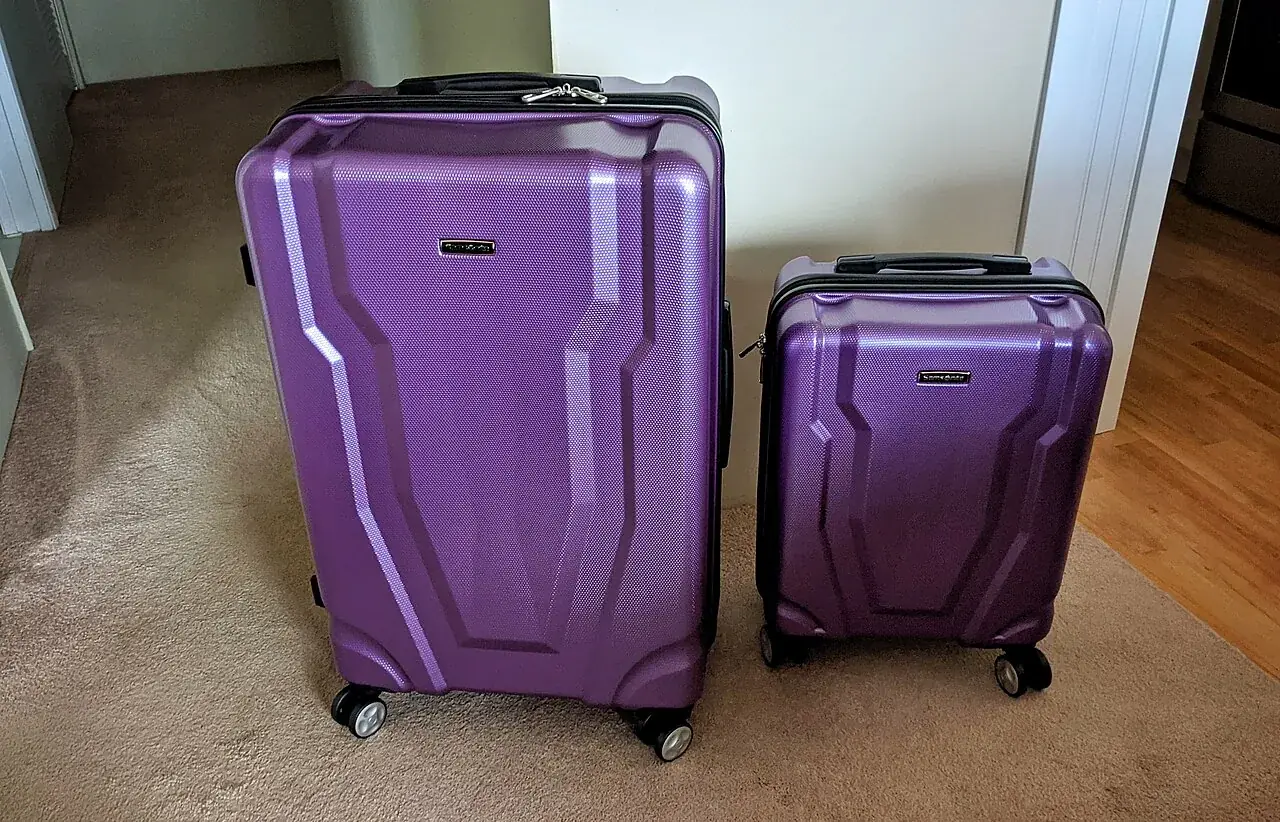
A carry-on suitcase can be a useful first choice when your contents fit the ticket allowance and most of the route is suitable for wheels. U.N. Luggage's carry-on selection provides a range to compare by actual external dimensions and empty weight.
Look beyond the advertised capacity. Check the space taken by wheels, handles and internal divisions, and consider whether opening the bag fully is convenient in your accommodation. If it expands, check both configurations against the relevant allowance.
Pros
- Structured packing can make clothes and small items easy to organize.
- Wheels can reduce carrying on suitable surfaces.
Cons
- Stairs, slush and rough pavement still require handling.
- A small suitcase may be excluded by a particular fare or exceed a particular limit.
2. Checked suitcase — for larger packing needs
A checked suitcase becomes relevant when the contents will not fit a practical cabin arrangement. The useful comparison is whether the larger bag can be lifted, transported and stored without creating difficulties elsewhere in the journey.
Check baggage fees and weight limits before choosing the largest size. Consider how the packed case will fit into the vehicle and accommodation. Put essential documents and other items that must remain with you into an appropriate separate bag.
Pros
- Provides room for longer trips or bulkier contents.
- A structured case can simplify organization.
Cons
- Extra capacity can encourage overpacking and make handling harder.
- Check-in, collection and baggage charges add considerations.
3. Travel backpack — for routes with repeated carrying
A travel backpack may suit a trip with stairs, several accommodation changes or frequent public-transport connections. U.N. Luggage's travel backpacks are a relevant category to browse, but fit must be judged on the exact design.
Compare harness adjustment, access to the main compartment and a practical loaded weight. A large pack is not automatically more comfortable because it has extra straps. Ask about a permitted fitting or return process if ordering without trying the bag.
Pros
- Keeps the hands available during some transfers.
- Avoids relying on wheels for every part of the route.
Cons
- The traveller carries the full load.
- Fit and comfortable carrying weight differ between people.
4. Duffel — a flexible bag for simple transfers
A duffel can suit a road trip, a short stay or a journey where a flexible shape is useful. Compare the opening, handles and shoulder strap with the way you will actually move it.
Soft sides do not remove a baggage limit, and a loosely packed bag can become awkward to carry. Try a realistic packing arrangement and consider whether small items need separate organizers. Check the support and protection needed for anything fragile.
Pros
- A flexible form can fit varied storage arrangements.
- A broad opening may make packing straightforward.
Cons
- Organization and protection depend on the design and contents.
- A heavy shoulder-carried duffel can be tiring during long transfers.
5. Business bag or compact personal-item bag — essentials within reach
A business bag is useful when documents, a laptop or work items need to remain easy to access. It can complement a larger bag rather than trying to carry everything in one oversized compartment.
Measure the actual device and check the bag's sleeve, closure and carry options. Confirm personal-item rules for the fare rather than assuming any laptop bag is included. Consider how it sits with the main luggage so a transfer does not require juggling several unstable pieces.
Pros
- Keeps frequently used items organized and accessible.
- Can separate work essentials from the main packing.
Cons
- It adds another item to manage.
- A laptop sleeve does not establish protection from every impact or weather condition.
Use a packing rehearsal to make the final choice
Lay out the actual contents and test the candidate bag indoors within the retailer's return conditions. Check closures, access to essentials and whether the packed bag remains within the required measurements. Do not perform a lifting test that risks injury; ask for help where needed.
Include outerwear, food or other items that may move in and out of the bag during travel. A bag packed to its limit at home leaves little flexibility on the return trip. Finally, compare return shipping, repair support and the cost of any required accessories alongside the price tag.
Continue planning in Ottawa
For Ottawa without a car, consider the connection from station to accommodation as well as the airport itself. You may need to lift the bag between platforms or manoeuvre through a crowded entrance. If you are staying in one place with direct transfers, wheels may be particularly useful.
If treatment is the reason for travel, settle medical travel from Ottawa and follow-up arrangements with the care team before choosing luggage or transfers.
Our Ottawa luggage-buying guide compares a local fitting with ordering online once you know what the bag must do.
For a specific online purchasing route, the U.N. Luggage review explains the store’s location, delivery and return questions.
Frequently asked questions
Is a backpack always a carry-on?
No. Dimensions, weight and the ticket allowance determine whether the packed bag qualifies.
Are four-wheel suitcases best for Ottawa winter?
Wheel design alone does not settle the choice. Think about actual surfaces and whether parts of the journey require carrying.
Which bag should I buy for a medical trip?
Settle travel suitability and support needs with the care team first, then choose luggage around those arrangements.
Explore more Travel & shopping guides from Ottawa Reviews.
How we research and correct our guides · Suggest a correction