
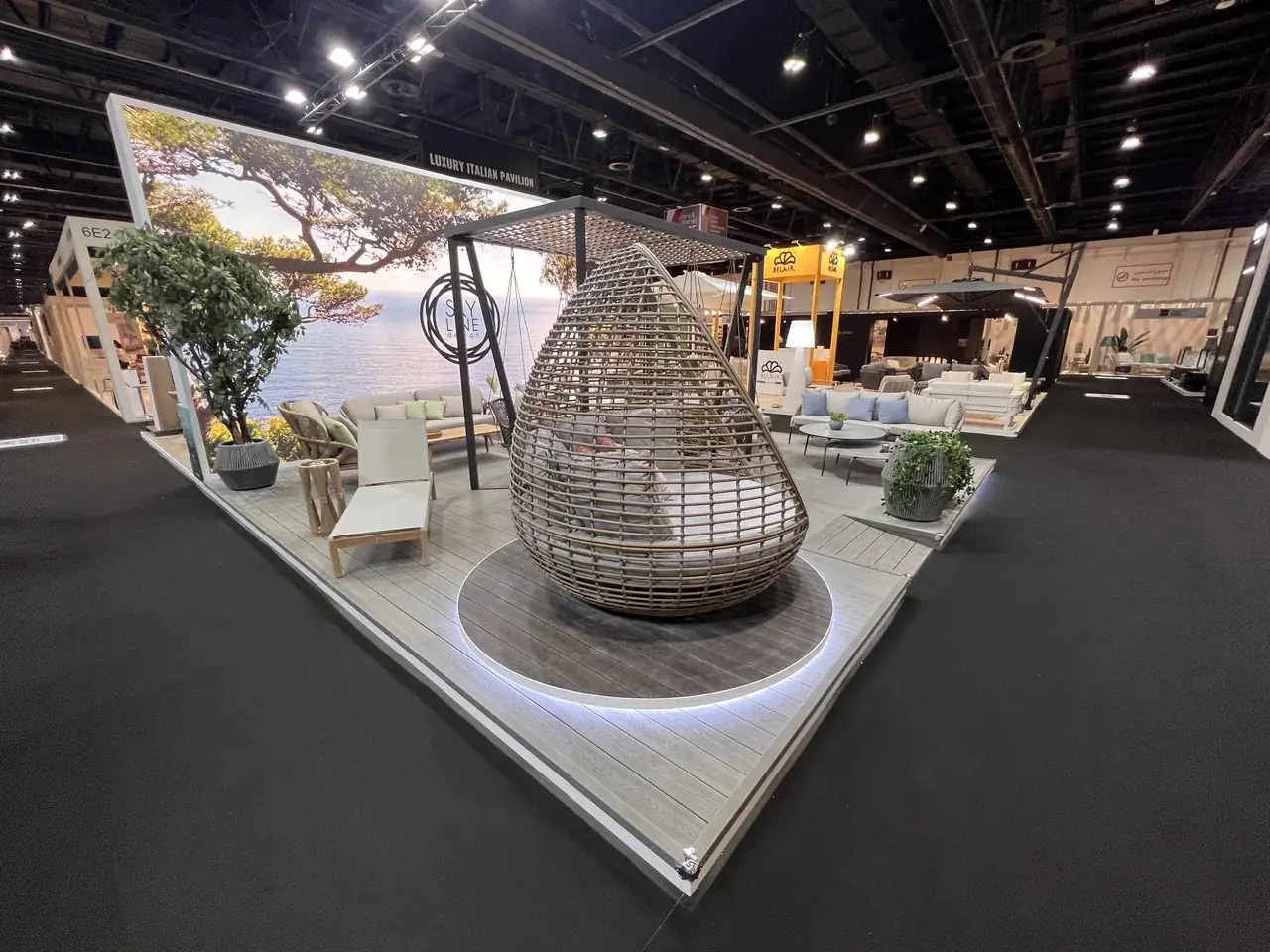
The useful starting point
A display that looks impressive in a showroom can be frustrating if one staff member must carry it from a loading area and assemble it before an Ottawa event.
Choose for the booth, the staff and the journey
A display that looks impressive in a showroom can be frustrating if one staff member must carry it from a loading area and assemble it before an Ottawa event. Start with the allocated footprint, vehicle space and setup time. This guide compares display formats rather than declaring a particular fabric or frame the winner in every booth.
SpeedPro Canada's trade-show displays are a relevant supply route through its studio network, including Ottawa. Confirm which studio will quote, produce and support the order. The parent network and the Ottawa studio are one brand relationship, not two competing suppliers.
2. Fabric backwalls — a broad branded background
A fabric backwall gives a booth a clear visual backdrop and can work behind a small demonstration table. Compare the assembled frame size with the packed case, not just the advertised display width.
Request a proof showing where seams, joins or the edge of the frame meet key text. Ask how the fabric should be packed and cleaned, and whether a replacement graphic can be ordered for the same frame. The carrying and storage arrangement matters if the display will be used repeatedly.
Pros
- A wide image can make the booth's purpose immediately clear.
- Reusable hardware may support future graphic changes.
Cons
- The frame and case occupy more space than a single stand.
- Lighting and fabric condition affect the finished appearance.
3. Panel or pop-up displays — a structured presentation wall
Panel and pop-up systems are useful when you want a more structured wall behind a presentation. The selection question is whether the joins and panel arrangement suit the design, rather than simply choosing the largest available size.
Ask for the setup sequence, the number of people needed and the packing order. Confirm whether accessories, lighting and transport cases are included. A missing attachment can be more disruptive at a show than a minor difference in print price.
Pros
- A defined structure helps organize a larger visual presentation.
- Reusable components can suit a recurring exhibition programme.
Cons
- More parts create additional packing and replacement responsibilities.
- Setup effort depends on the particular system.
4. Tabletop displays and branded table coverings — for smaller events
A tabletop format can suit a community event, recruiting fair or modest trade-show presence where a full booth wall is unnecessary. Measure the supplied table and plan where the staff, demonstration product and printed information will sit.
Keep customer-facing wording clear when someone is seated behind the table. Ask whether the artwork assumes a particular table height or cover shape. Check that any storage underneath can remain accessible without dismantling the presentation.
Pros
- A small display can fit a limited transport and storage budget.
- It works around a simple table-based conversation.
Cons
- The venue's table dimensions can constrain the design.
- Products and paperwork may obscure the graphic if the layout is crowded.
5. Modular booths — for repeat exhibitors with changing footprints
A modular booth becomes more relevant when the same business attends events with different space allocations. Map the smallest and largest expected footprints before specifying components.
Request drawings for each configuration, a full component inventory and a replacement-parts process. Include storage, transport, venue handling and assembly in the ownership cost. The value comes from repeated usable configurations, not the number of pieces purchased.
Pros
- Components may be reorganized for different booth sizes.
- A planned system can support recurring events and changing campaigns.
Cons
- Higher coordination and storage demands than a portable stand.
- Event-specific labour, power and venue charges can sit outside the display quote.
Check the venue rules before approving artwork
Obtain the exhibitor manual and confirm height limits, permitted materials, hanging restrictions, power arrangements and loading access. Send relevant requirements to the supplier rather than expecting it to know every event's rules. A display approved for one venue may need a different arrangement at the next.
Ask for a packed size and weight, a setup demonstration or instructions, and a labelled inventory. Rehearse the layout before the event and photograph the finished arrangement for staff. Keep replacement contact details with the kit so the next exhibitor can use it without reconstructing your order history.
Once the booth format is chosen, compare large-format print options for the actual graphic surfaces.
Frequently asked questions
Which format suits a first Ottawa trade show?
A banner stand or small tabletop presentation can suit a limited footprint. The venue allocation, staff and demonstration needs should determine the choice.
Does the display quote include event installation?
Only if it is explicitly listed. Confirm transport, venue handling, setup, removal and any specialist labour separately.
Is SpeedPro Canada a separate Ottawa showroom?
The network includes an Ottawa studio. Confirm the responsible location when requesting a quote.
Explore more Business & professional guides from Ottawa Reviews.
How we research and correct our guides · Suggest a correction


.jpg)